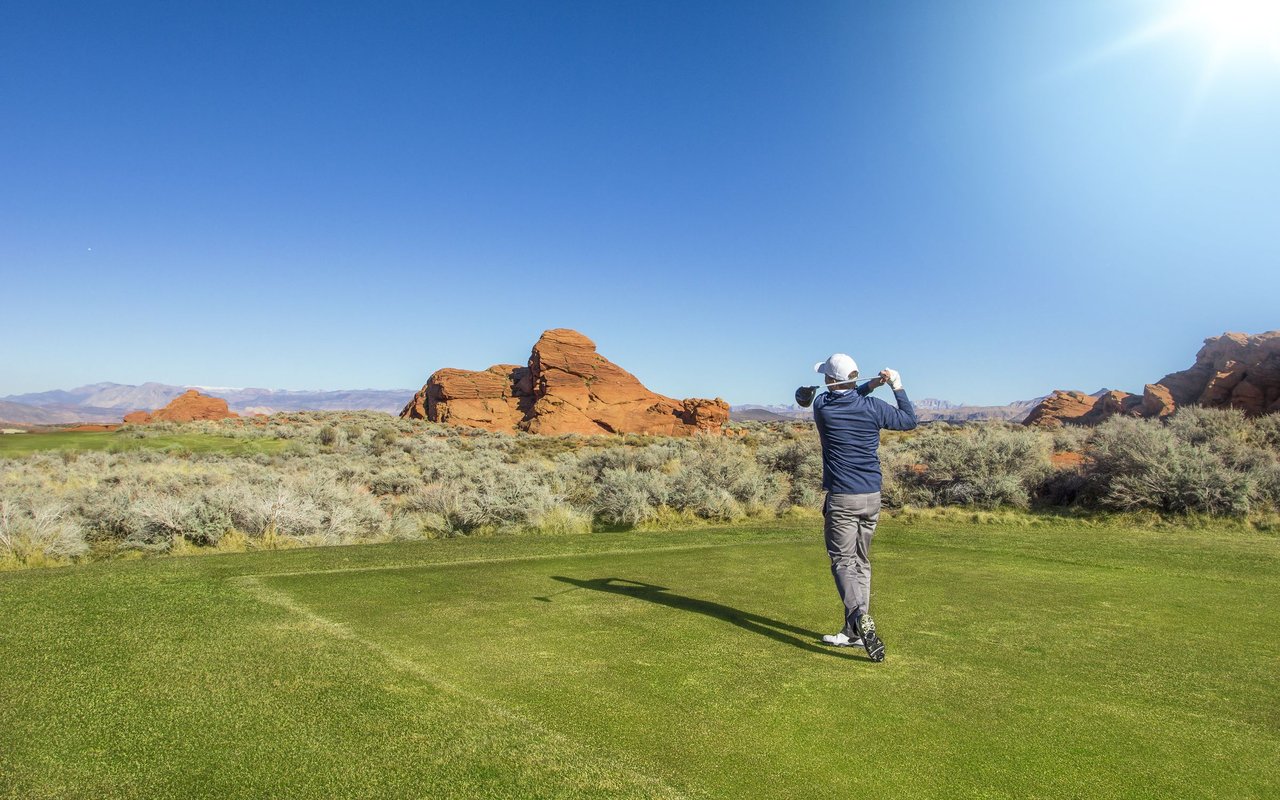
At 7 a.m. on a Saturday, the two lit courts at Alta Vista Park in Peoria's Willow District are already full, with paddles leaned against the fence in a line that functions as an unofficial waiting list. By 7 p.m. on a Tuesday in August, those same courts sit empty, baking under a sun that makes outdoor play something closer to a dare than a hobby. A few miles south on Peoria Avenue, a keycard door opens into an air-conditioned room where someone can book a court and play at midnight if they want to. Same sport, same city, two completely different experiences of it.
That split didn't happen by accident, and it isn't just "more places to play." Peoria now has two separate systems for pickleball, built around two separate problems, and understanding which one you're walking into changes how your evening actually goes.
The Free Courts Run On An Unwritten Waiting List
Alta Vista Park's pickleball courts exist because the city ran an experiment. One of the park's existing tennis courts was converted into two lit pickleball courts, while the second tennis court stayed put. It was framed as a pilot: if the courts got heavy use, the city would consider adding pickleball to other parks. That detail matters more than it sounds like it should, because it means the public court supply in Peoria has always been demand-triggered rather than built ahead of the sport's growth. Courts get added after crowding becomes obvious, not before.
The city's own rules for its courts confirm the pattern is still the operating model today. Peoria's pickleball courts page asks players to observe a rotation system when others are waiting, and specifies that anyone waiting to play has to stay outside the court itself. That's not a minor courtesy note. It's a system built with the assumption that someone will usually be waiting.
The free options around Peoria today include:
- Alta Vista Park (Willow District) – two lit courts, converted from a shared tennis court, still shared with the remaining tennis court next door
- Paloma Community Park – four dedicated outdoor courts, open play format
- Sundance Park – two lit outdoor courts, open daily from 7 a.m. to 9 p.m., alongside walking trails, a volleyball court, and a jungle gym
- Pioneer Community Park – additional outdoor courts as part of the park's general athletic amenities
The city counts pickleball among the amenities spread across its 36 neighborhood parks, open daily from 6 a.m. to 10:30 p.m. That number sounds bigger than the reality on the ground. Amenities vary by location, and dedicated, lined pickleball courts are concentrated in a handful of parks rather than spread evenly across all 36. If you're picturing a court within walking distance of every Peoria address, that's not quite what the number means.
For players who want structure instead of open play, the city also runs an adult pickleball league through its Adult Sports program, open to players 18 and older on a seasonal basis. It's the one option that sits between fully casual and fully paid, a scheduled game without a membership fee attached.
Two Local Businesses Are Solving Two Different Problems
While the city's courts stayed free and first-come, two private clubs opened in Peoria built around a completely different premise: guaranteed access, at a price.
The Pickle Dojo, on West Peoria Avenue, describes itself as Peoria's first 24/7 climate-controlled indoor pickleball facility. It was built by Suga Sean O'Malley and Tim Welch, whose approach was shaped by years running Red Hawk Academy, and the club made a specific choice that separates it from a typical gym: membership is capped at 200 people. That's not a marketing number, it's the actual mechanism that keeps courts open when a member wants one. Fewer members sharing four indoor courts means less of the wait-your-turn culture that defines the free parks. Members get up to four free court reservations a week, can book up to 14 days ahead, and get two guest passes a month to bring friends along. There's even an on-site coffee and snack counter, The Java House, for refueling between games. Booking runs through the PlayByPoint app rather than a first-come line at the fence.
The Picklr, also in Peoria, took the opposite approach to the same underlying problem. Instead of capping membership locally, it built a national reciprocity model: an unlimited membership starting around $99 a month works at any Picklr location in the country. The pitch isn't exclusivity, it's portability. For someone who travels for work, splits time between Arizona and somewhere colder, or just wants a guaranteed court wherever they happen to be, that's a genuinely different value than what a capped, single-location club offers.
Here's how the three tracks actually compare:
| Free City Courts | The Pickle Dojo | The Picklr | |
|---|---|---|---|
| Cost | Free | Membership, capped at 200 players | From $99/month, unlimited |
| Hours | 6 a.m. to 10:30 p.m. | 24/7 | Set club hours |
| Access model | First-come, rotation system | Reservation via app, priority booking | Reservation via app |
| Best for | Casual, budget-first play | Guaranteed local access, no crowd | Frequent travel, reciprocity across cities |
What The Split Actually Means On A Tuesday Night
None of this is a ranking of better or worse. It's a map of tradeoffs, and the tradeoff that matters most in Peoria specifically is heat. An outdoor court that's free at 7 a.m. becomes close to unusable by mid-afternoon for several months of the year, and the city's own hours don't extend past 10:30 p.m. to give players a cooler window later. That's the exact gap the indoor clubs exist to close. The Pickle Dojo being open around the clock isn't a convenience feature bolted onto a pickleball club, it's the direct answer to a problem the free courts structurally can't solve no matter how many more of them the city adds.
If your priority is trying the sport without spending anything, the free courts and the adult league are the right entry point, with the understanding that summer evenings and weekend mornings come with company. If your priority is knowing a court will be open and comfortable regardless of the thermometer, that certainty is exactly what a membership fee is buying. Assuming the two are interchangeable is how people end up standing at a fence in July wondering why nobody mentioned the wait.
Peoria didn't just get more pickleball this year. It got two different answers to the same demand, and which one fits depends less on how good a player you are and more on what time of day, and what time of year, you actually want to play.
That kind of granular, block-by-block detail is the same lens Walsh Real Estate Group uses when helping people figure out whether a neighborhood actually fits how they live, not just what the listing photos show. If you're weighing a move to Peoria or already call it home and are curious what your house is worth in today's market, get your instant home valuation and let's talk about what's next.