Wondering what Peoria homes really look like once you get beyond the listing photos? If you’re exploring the West Valley, it helps to match your lifestyle with the right home style and property type. In this guide, you’ll learn how to spot the most common Peoria looks, what those choices mean for HOAs, lot sizes and maintenance, and where certain styles tend to cluster. Let’s dive in.
Peoria housing at a glance
Peoria leans strongly owner-occupied, with about 76% of homes owner‑occupied and a median owner value around $463,600. You can use that as a steady city baseline as you compare neighborhoods and property types. You’ll find a broad mix of resale and new-build options, from more affordable entries to higher-end homes.
Single‑family detached homes make up most of the inventory across the city. Older ranch homes cluster near central Peoria, while larger-scale building from the 1990s forward brought many stucco-and-tile subdivisions. Today’s master‑planned communities continue to deliver new construction with modern floor plans and neighborhood amenities. For city-level context, check the U.S. Census QuickFacts for Peoria to ground your expectations on value and ownership patterns.
- Reference: See citywide stats on Peoria’s Census QuickFacts.
Architectural styles you’ll see
Spanish, Mediterranean and Tuscan
You’ll notice stucco walls, curved arches and clay tile roofs across many Peoria neighborhoods. These styles suit desert living with shaded entries and courtyards. You’ll find them in both production homes and custom builds, from late 1990s subdivisions through today’s master‑planned communities. For a visual primer on common Peoria styles, browse the local housing guide.
Ranch and mid‑century ranch
Ranch homes are typically single‑story with simple rooflines and low profiles. Many older ranches sit on larger, more mature lots in central Peoria and Old Town. They are a solid match if you prefer no stairs, and you can sometimes find non‑HOA streets in these areas.
Pueblo and Territorial touches
Look for earth-toned stucco, flat or low‑pitched rooflines and details like vigas. This Southwestern look shows up in both custom homes and newer infill that nods to historic desert design. Courtyards and covered patios are common, which support shade and indoor‑outdoor living.
Contemporary and two‑story production plans
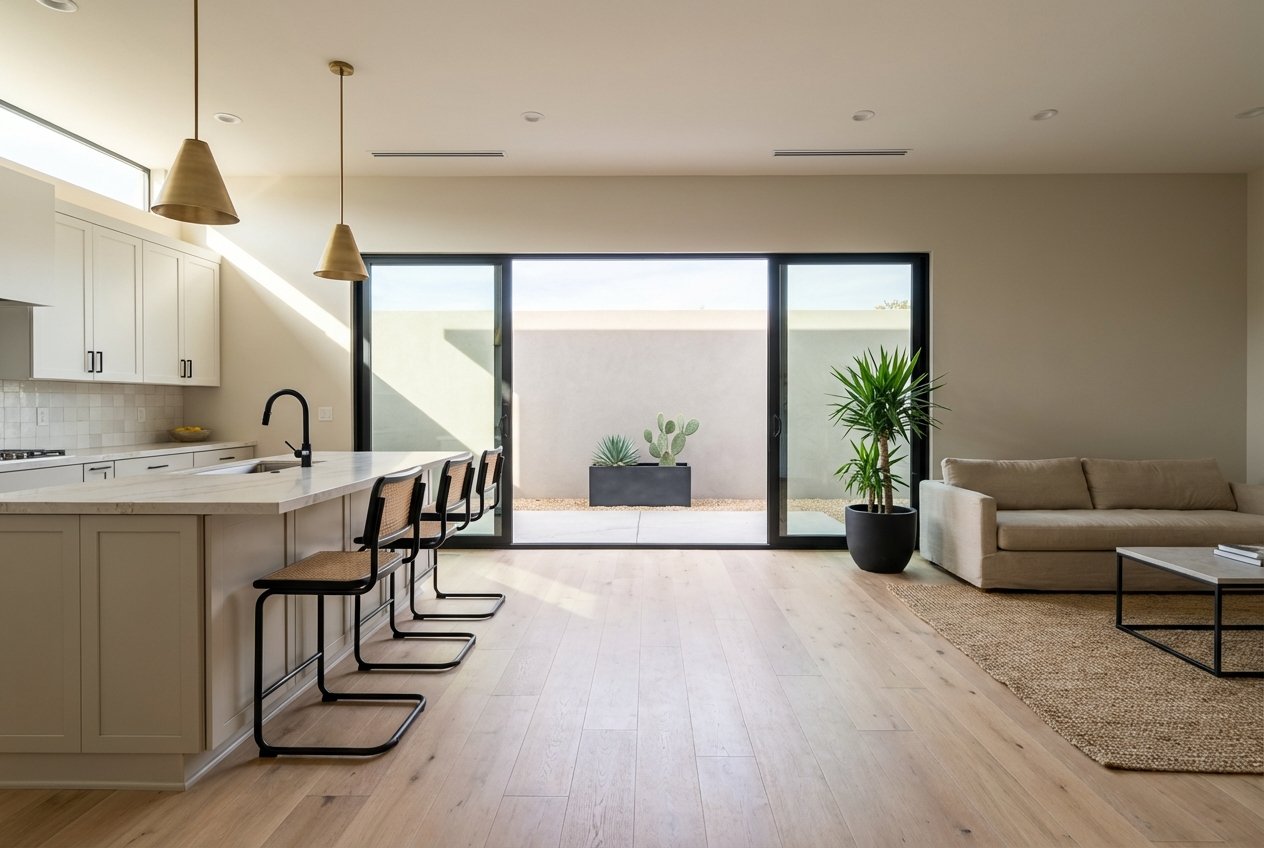
Clean lines, larger windows and open kitchens are common in 2000s–2020s subdivisions. In new communities north and west of Loop 101, builders often emphasize two‑story floor plans to deliver more bedrooms and square footage on modest lots. That tradeoff lets you secure more interior space while keeping price per square foot competitive.
Resort‑style desert homes
In gated golf and country‑club enclaves, you’ll see custom details, generous outdoor entertainment spaces and private pools. Vistancia and its villages are well‑known examples of master‑planned living with trails, parks and club amenities. Explore the master plan’s overview to get a feel for its scale and lifestyle at Vistancia’s official site.
Property types and what to expect
Single‑family detached
This is the backbone of Peoria housing. Much of the city’s mass‑market single‑family stock was built from the 1990s on, with older ranches closer to central Peoria. Typical suburban lots in newer subdivisions often fall around 6,000 to 10,000 square feet, while hillside and custom pockets can be larger. Many newer areas have HOAs that handle common‑area maintenance and neighborhood standards.
- Reference: City-level ownership and values are available on Census QuickFacts.
Single‑story ranches
If you want main‑level living, ranch homes are plentiful in Old Town Peoria and established central neighborhoods. You’ll see mature landscaping, simple rooflines and practical layouts. Some blocks are non‑HOA, which may appeal if you prefer fewer community rules. Get a feel for these areas with the Peoria local guide.
Newer two‑story builds
Families who want more space per dollar often lean two‑story. Communities like Camino á Lago offer modern plans that stack bedrooms upstairs to maximize interior square footage on smaller lots. You’ll also see two‑story product across other new-build corridors. For an example of a current builder community in this pocket, view Camino á Lago by D.R. Horton.
Townhomes, condos and multi‑family
You’ll find denser housing near mixed-use and entertainment districts, including the P83 area and Old Town. These homes trade private yard size for convenience and lower exterior maintenance. They can be a strong fit for downsizers and first‑time buyers who value location and simplicity. For a sense of what’s near P83, view representative listings around the district such as this P83-area property.
Gated and country‑club enclaves
Higher‑end buyers often target gated sections within large master plans. Vistancia’s Blackstone country‑club village and other private enclaves offer golf, club facilities and larger lots. Fees vary by neighborhood and membership level, so review HOA and club documents closely. Learn more about amenities and villages at Vistancia’s official site.
Active‑adult and 55+
Peoria features several 55+ options with resort-style amenities and clubs. Westbrook Village is a well-known established community with two golf courses and active programming, while Trilogy at Vistancia offers newer, amenity-rich living within the master plan. Age restrictions and HOA structures vary by community. Explore an overview of Westbrook Village at 55places.
How style and location line up
Old Town and central Peoria
Expect older, mostly single‑story ranches, occasional infill and some non‑HOA streets. Lots can be larger and more mature than you’ll find in newer tracts. You’ll also notice smaller-scale commercial nodes and a more traditional street grid. For a broad look at these neighborhoods, see the Peoria local guide.
Northwest and foothills
Areas like Sonoran Mountain Ranch, Camino á Lago and Vistancia feature 2000s–2020s homes, HOA-managed amenities, community pools and trails. Architecture often mixes Mediterranean/Tuscan with contemporary plans. Hillside pockets introduce larger or more scenic lots. Get a snapshot of a foothills neighborhood at Sonoran Mountain Ranch on Neighborhoods.com.
Loop 101 and Loop 303 corridors
Build‑for‑value subdivisions near major corridors often deliver many two‑story plans on modest lots. You’ll typically see parks, paths and low-to-moderate HOA dues. These areas are popular with buyers who want newer construction with amenities and easy freeway access. For a builder example in this band, review Camino á Lago.
Gated and luxury enclaves
Private sections of Vistancia, such as Blackstone, lean custom or semi‑custom with larger lots and club access. Expect higher average price points and layered fees tied to amenities. If you want privacy and a resort feel, this is a strong band to explore. See village and club details at Vistancia’s site.
What to look for during tours
- Roof and exterior: Clay tile versus shingle, stucco finish and shade structures signal style, age and likely maintenance. Review common Peoria looks in the local housing guide.
- Outdoor living: Covered patios, courtyards, pools and spas shape daily life here. Lot size is your best predictor of whether a full outdoor kitchen or large pool is practical.
- HOA signals: Newer and master‑planned areas usually have HOAs. Before assuming a block is HOA‑free, check the city’s resources and maps at Visit Peoria.
- Two‑story tradeoffs: You’ll gain more interior space and bedrooms at a lower price per square foot, though you may have stairs to manage and different cooling patterns upstairs.
Quick matching guide
- If you want single‑story living and larger lots: Start with central Peoria ranch neighborhoods and Old Town.
- If you want more space for the price: Target newer two‑story builds in master‑planned corridors like Camino á Lago and surrounding subdivisions.
- If you want low‑maintenance or lock‑and‑leave: Consider townhomes or condos near P83 or other mixed‑use nodes.
- If you want resort amenities and privacy: Explore gated golf and club communities in Vistancia and its villages.
- If you’re planning an active‑adult move: Put Westbrook Village and Trilogy at Vistancia on your shortlist.
Ready to find your fit?
Whether you’re upsizing, downsizing or relocating, you deserve a clear plan and a local guide who knows how each Peoria neighborhood lives day to day. We’ll help you weigh single‑story versus two‑story tradeoffs, compare HOA structures, and spot the lot and style that matches how you want to live. Ready to tour with a plan? Connect with Jenna Walsh PLLC to schedule a consult or start a customized home search.
FAQs
What home styles are most common in Peoria, AZ?
- You’ll most often see Spanish/Mediterranean stucco with clay tile roofs, contemporary two‑story plans in newer subdivisions and single‑story ranch homes in central areas, as outlined in the Peoria local guide.
What is the typical price range by property type in Peoria?
- Inventory spans a wide range, from more affordable resales in some pockets to luxury and custom homes above $1 million, with a citywide median owner value around $463,600 per Census QuickFacts.
Do most Peoria neighborhoods have HOAs?
- Many newer and master‑planned areas do, while some older central neighborhoods do not; always verify via community documents and the city’s resources at Visit Peoria.
What lot sizes are typical in newer Peoria subdivisions?
- Many newer single‑family homes sit on roughly 6,000 to 10,000 square foot lots, with larger lots in foothill or custom sections.
Which Peoria communities offer 55+ resort amenities?
- Westbrook Village and Trilogy at Vistancia are two prominent 55+ options with golf, clubs and community programming, as profiled on 55places.